
Master the complete AI development stack with hands-on, project-driven courses

A 7-session hands-on series covering AI employees from first install to deployment. Set up OpenClaw with WhatsApp/Telegram, teach it custom skills with safety boundaries, orchestrate Claude Code from your phone, connect Google Workspace, automate compound workflows, and graduate to NanoClaw's container-isolated architecture for regulated industries. No prerequisites — understand what you're building and why it works.

Master AI-Driven Development (AIDD) methodology using Python, Gemini CLI, and build production-quality agentic AI applications. Learn AI-native thinking—architecting with specifications, collaborating with AI agents to ship software systems.
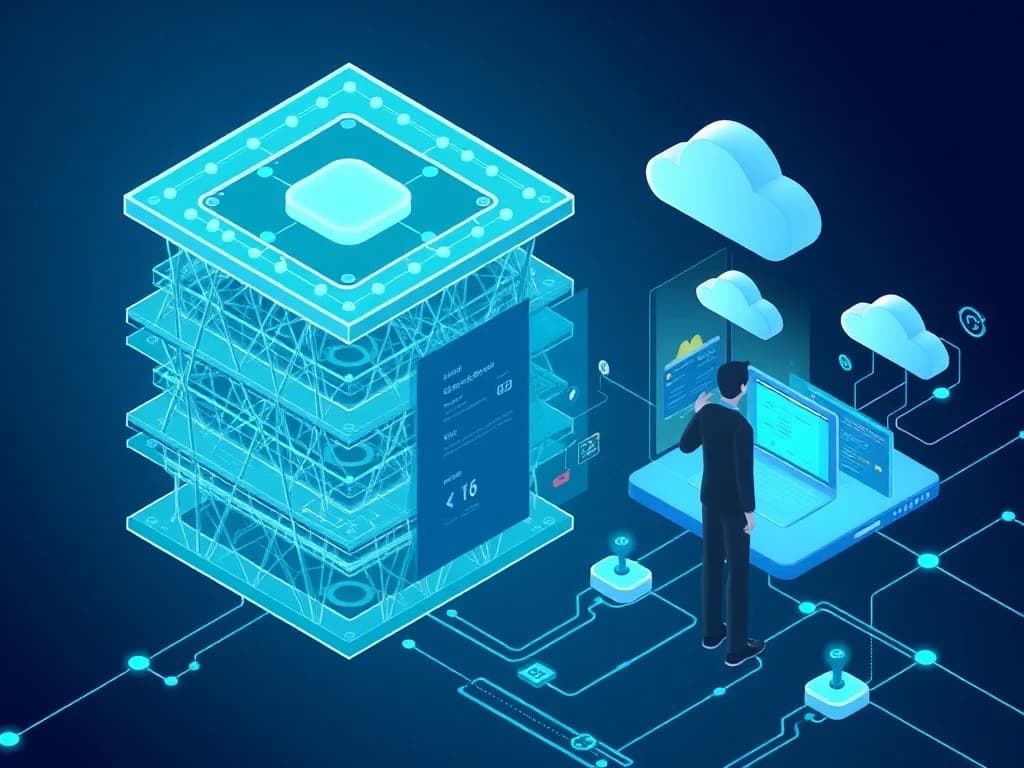
Build cloud-native infrastructure for intelligent agent systems. Using AI-Driven Development (AIDD), you’ll learn Docker, Kubernetes, and Dapr to design and deploy production-ready AI agents with observability, scalability, and cloud-agnostic flexibility — laying the foundation for autonomous AI at scale.

Advance Agentic AI concepts building on AI-201, with focus on Model Context Protocol (MCP), Agentic Memory, and Agentic RAG. Study established agentic design patterns for building effective agents.

Focus on Agentic Web theory and practical implementation of Agent-to-Agent (A2A) Protocol systems. Explore intelligent agents' interactions in web-based environments, contextual information sharing, and collaboration on distributed tasks. Examine core design principles for web-native, cooperative AI systems and how A2A protocols enable real-time communication in diverse environments.
Focus on cloud-first development methodologies for Agentic AI systems. Explore scalable, distributed AI architectures using Docker and Kubernetes for deploying AI Agents and MCP Servers. Design and deploy production-ready AI applications optimized for cloud environments through hands-on projects.

Cover enterprise-grade distributed application runtime environments with focus on Distributed Application Runtime (Dapr) implementation, managed database systems, and messaging architectures. Design and implement planet-scale AI agent networks for global distributed infrastructure.
Explore Physical AI and humanoid robotics, focusing on integration of ROS 2, Gazebo Robot Simulator, and NVIDIA Isaac™ AI robot development platform. Learn to design, simulate, and deploy advanced humanoid robots capable of natural interactions, covering ROS 2 for robotic control, simulations with Gazebo and Unity, and using OpenAI’s GPT models for conversational AI.